



Updated: April, 2026
Choosing the wrong Meta ad format wastes budget. This guide compares image, video, carousel, Reels, collection, and Advantage+ formats by objective and estimated CPA — updated for 2026 with AI creative tools, Threads ads, and the latest placement changes.
Introduction
If you're in marketing, paid media, or data analytics, you know staying sharp on platforms like Meta isn't just good practice, it's essential. When we're talking about Meta, truly understanding Meta ad formats isn't just about keeping up, it's about making our budgets stretch further, hitting the right audience, and most importantly, driving real results. Heading into 2025, getting that Meta ad format choice right is a bigger deal than ever.
Why Your Ad Format Choice Matters So Much in Meta Ads
Think of your ad format as the suit your message wears. A brilliant message in ill-fitting clothes often gets ignored. But the right Meta ad format makes your creative sing, genuinely connecting with your audience, whether they're scrolling Facebook, caught up in a Reel, or flicking through Instagram Stories. Every single format gives us unique ways to engage, tell our story, and convert. If we ignore this fundamental point, it's like trying to force a square peg into a round hole, it simply won't perform optimally.
What's Changed in 2026
Meta's ad ecosystem has seen major shifts since 2025. Here's what matters for format selection:
- Flexible Format removed from Ad Setup (March 2026) — automation is now distributed across Format Display Options, Flexible Media, and Advantage+ Creative. No more single toggle.
- Instagram Explore ads removed (January 2026) — this placement no longer exists in Ads Manager.
- Reels post-loop ads removed (November 2025) — overlay ads remain, but the post-loop placement is gone.
- Threads ads expanding — with over 400 million monthly active users, Threads now supports image, video, and carousel ads. Advantage+ Catalog defaults to single image and carousel on Threads.
- WhatsApp Status ads — new placement reaching 1.5 billion daily users via the Updates tab.
- Feed URL footers removed (March 2026) — ad previews no longer show destination URLs in the footer.
- AI creative at scale — Meta's video generation tools hit a $10 billion revenue run-rate in Q4 2025. AI-generated ads now require disclosure if using external tools like Midjourney or DALL-E.
The Primary Meta Ad Formats
Let's break down the core Meta ad formats we'll be working with this year. We'll look at their strong suits and when to deploy them.
Image Ads
Image ads are the steadfast foundation of digital advertising, and there’s a good reason for that. They’re straightforward to put together, incredibly versatile, and can be super effective when you combine a compelling visual with crisp, clear copy.
- What they are: A single static image, paired with text, a headline, and a call-to-action (CTA) button.
- Where you'll see them: Facebook Feed, Instagram Feed, Facebook Marketplace, Audience Network.
- Strengths:
- Simplicity: Quick to produce and easy for A/B testing.
- Clarity: Perfect for showcasing one product, making a clear value proposition, or delivering a simple, direct message.
- Cost-effective: Generally less demanding on resources to create than video.
- Best for: Highlighting specific product features, promoting a direct offer, driving traffic to a landing page, or building brand recognition through powerful visual branding.
- Things to remember: With so much content vying for attention, your image needs to be truly striking to stand out. We're talking high-quality photography or graphics – non-negotiable.
Carousel Ads
Carousel ads let you feature multiple images or videos within one ad unit, and each one can have its own link. This format is a real powerhouse for storytelling or showcasing variety.
- What they are: A swipeable series of 2-10 images or videos (or a mix) that users can scroll through. Each card can have its own unique headline, description, and link.
- Where you'll see them: Facebook Feed, Instagram Feed, Facebook Marketplace, Audience Network.
- Strengths:
- Storytelling: Excellent for showing different product angles, explaining a step-by-step process, highlighting several items in a collection, or developing a narrative.
- More engagement: The interactive nature encourages users to swipe, often leading to better engagement rates.
- Flexibility: You can blend images and videos for a richer experience.
- Best for: E-commerce businesses displaying product lines, real estate agents showcasing properties, explaining multi-step guides, or presenting before-and-after scenarios.
- Things to remember: Every single card needs to be compelling on its own, but also contribute to a cohesive overall message. Ensure there's a clear progression or theme across the entire carousel.
Video and Reels Ads
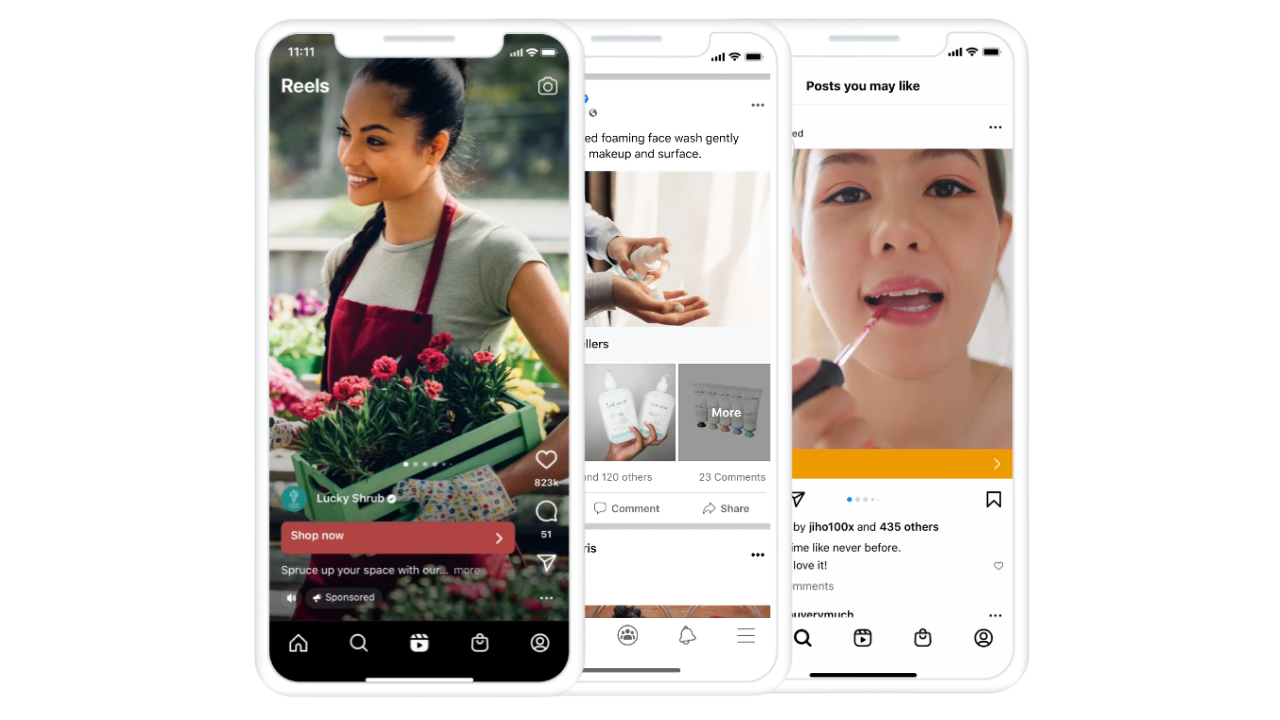
Video content continues its rapid ascent, and Meta's commitment to Reels has made short-form video an indispensable Meta ad format. Video ads offer dynamic storytelling and can convey complex messages in a flash.
- What they are: Everything from quick, punchy Reels to longer in-stream videos; this format leverages motion and sound to capture attention.
- Where you'll see them: Facebook Feed, Instagram Feed, Facebook In-Stream Video, Instagram Reels, Facebook Reels, Audience Network.
- Strengths:
- High engagement: Video is inherently more engaging than static images, especially short-form content like Reels.
- Storytelling power: Great for conveying emotions, demonstrating how a product works, or showcasing your brand's personality effectively.
- Attention-grabbing: Movement is notoriously hard to ignore in a busy feed.
- Best for: Product demonstrations, brand narratives, behind-the-scenes glimpses, testimonials, tutorials, or highly dynamic product showcases.
- Things to remember: Video production can be more resource-intensive. Keep videos concise, especially for Reels (aim for under 15-30 seconds for maximum impact), and always design for sound-off viewing, as many users watch without audio. Captions are your best friend here!
Collection Ads
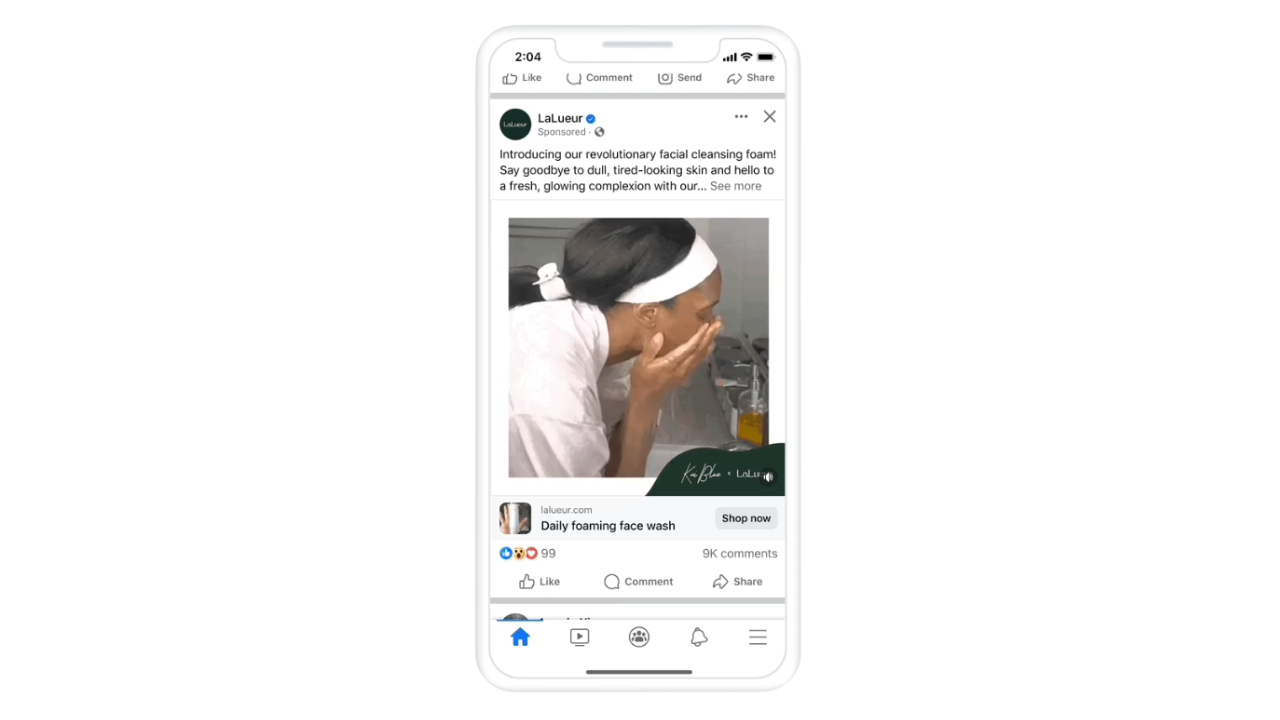
Collection ads are tailor-made for mobile, offering an immersive shopping experience right within the ad itself.
- What they are: A full-screen, mobile-optimized experience that starts with a primary video or image, followed by a grid of product images. Tapping the ad opens an instant experience (Canvas) where users can browse more products.
- Where you'll see them: Facebook Feed, Instagram Feed.
- Strengths:
- Seamless shopping experience: Keeps users inside Meta's ecosystem, cutting down on friction in the purchase journey.
- Visual merchandising: Ideal for showcasing a catalog of products.
- Mobile-first: Designed for optimal performance on smartphones.
- Best for: E-commerce businesses looking to drive product discovery and sales, particularly those with extensive product catalogs.
- Things to remember: You'll need a product catalog connected to your Meta Business Manager. That initial visual needs to be highly engaging to encourage the user to tap through.
Advantage+ and Automated Formats
Meta's Advantage+ suite, which includes Advantage+ Creative and Advantage+ Shopping Campaigns, represents a significant leap towards AI-driven ad optimization. These features can dynamically adapt your ad creative and Meta ad format based on user behavior and performance data.
- What they are: Instead of us manually selecting a single format, Advantage+ uses machine learning to automatically generate variations of our creative (e.g., adding text overlays, adjusting aspect ratios, or even building basic video from images) and deliver the most effective format to each user.
- Where you'll see them: Across all eligible placements within Meta's ecosystem.
- Strengths:
- Optimization: Automates the whole process of A/B testing and creative optimization, potentially leading to much better performance.
- Efficiency: Saves us a good chunk of time in ad creation and ongoing management.
- Personalization: Delivers the most relevant ad experience to each individual user.
- Best for: Advertisers looking to scale campaigns, those with a good volume of creative assets, and anyone aiming to leverage Meta's AI for performance enhancement.
- Things to remember: While incredibly powerful, it's still crucial to feed it high-quality initial assets. We also need to trust Meta's algorithms to make the right choices, so monitoring performance closely is absolutely essential. This is also where tools that automate your reporting can be a lifesaver, allowing you to quickly spot trends and make data-driven adjustments across your various Meta ad formats.
AI-Generated Creative
Meta's AI creative tools have scaled rapidly — over 4 million advertisers now create more than 15 million AI-enhanced ads monthly. Here's what's available in 2026:
- Video Expansion for Reels — automatically adapts existing video to 9:16 vertical format by generating additional visual space frame by frame. No need to rebuild every video for Reels.
- AI-generated voiceover — adds narration to video ads automatically.
- AI avatar videos — generates UGC-style videos featuring AI-created presenters.
- Automated video from catalog — turns product images into video ads with adaptive layouts on Reels.
- Translation features — multilingual video generation for international campaigns.
Important: If you use external AI tools (Midjourney, DALL-E, ElevenLabs) to create ad assets, Meta now requires disclosure. Undisclosed AI content can result in ad disapproval or account flags.
Threads Ads
With over 400 million monthly active users, Threads is now a viable ad placement:
- Supported formats: Single image, video, and carousel (1:1 image carousels).
- Rendering: 4:5 for images and videos, with various video aspect ratios supported.
- Advantage+ Catalog defaults to single image and carousel on Threads.
- Placement Asset Customization (PAC) lets you create Threads-specific creative.
Threads works best for brands targeting engaged, text-first audiences. It's still early, so CPMs tend to be lower than Feed or Stories.
Which Format to Use Based on Your Objective (With Estimated CPA)
| Format | Best Objective | Avg CPC | Est. CPA | Best For |
|---|---|---|---|---|
| Single Image | Traffic / Awareness | $0.70 – $1.20 | $28 – $35 | Quick tests, offers, simple products |
| Carousel | Sales / Leads | $0.60 – $1.00 | $18 – $25 | Multi-product, comparisons, e-commerce |
| Video (Feed) | Awareness / Sales | $0.80 – $1.50 | $22 – $30 | Demos, storytelling, brand building |
| Reels | Awareness / Engagement | $0.50 – $0.90 | $20 – $28 | UGC-style, trends, younger audiences |
| Collection | Sales (mobile) | $0.90 – $1.40 | $15 – $22 | Product catalogs, mobile commerce |
| Advantage+ Shopping | Sales (e-commerce) | Auto-optimized | ~32% lower* | Broad audiences, catalog-driven |
| Lead Ads | Leads | N/A (in-app) | $20 – $28 CPL | Form capture, B2B, services |
*Advantage+ Shopping CPA is ~32% lower vs manually configured campaigns (Meta, Q4 2025). CPC/CPA ranges are cross-industry estimates based on 2026 benchmark data. Actual results vary by industry, creative quality, and targeting.
Awareness
The goal is maximum reach and brand recall. You need formats that stop the scroll and leave an impression — even if the user doesn't click.
Best Formats:
- Reels Ads — Reels deliver 26% lower CPC than Feed, making them the most cost-efficient format for top-of-funnel reach. Short, vertical, sound-on content feels native and gets watched longer.
- Video Ads (Feed) — Longer videos (15-30 seconds) work for brand storytelling and emotional connection. Instagram Stories deliver engagement rates 61% higher than Facebook Feed.
- Image Ads — Simple, fast to produce, and effective for brand awareness when combined with bold visuals. Best for retargeting audiences who already know you.
Why they work: These formats prioritize visual impact and watch time over clicks. The algorithm rewards content that keeps users engaged, and video formats consistently outperform static images on attention metrics.
Traffic
Driving users from Meta to your website, landing page, or app requires formats that clearly communicate the value and make clicking easy.
Best Formats:
- Image Ads — Simple, direct, and effective for driving clicks when combined with clear copy and a compelling CTA. Lowest production cost per ad.
- Carousel Ads — Showcase multiple products or pages, each linking to a different URL. Users self-select what interests them most. Carousels deliver 30-50% lower cost per conversion than single-image ads.
- Video Ads — Demonstrate a clear benefit that encourages a site visit (e.g., a tutorial that links to the full guide, a product demo that links to the product page).
Important: Feed URL footers were removed in March 2026 — your ad copy and CTA button must now clearly communicate the destination since users can no longer see the URL preview.
Leads
Generating leads means convincing users to share their contact information. The less friction, the better.
Best Formats:
- Lead Ads — Native forms that open inside Meta without leaving the app. Pre-filled fields (name, email) from the user's profile reduce drop-off dramatically. Average CPL for lead campaigns is $27.66.
- Carousel Ads — Show multiple benefits, testimonials, or use cases before the CTA. Each card builds the case for conversion.
- Video Ads — Short explainers or customer testimonials that end with a clear lead capture CTA.
Why they work: Lead Ads eliminate the landing page entirely — no page load time, no mobile friction. For B2B and services, this format consistently delivers the lowest cost per lead.
Sales & Retargeting
Converting users who already know your product or re-engaging past visitors requires formats optimized for purchase.
Best Formats:
- Advantage+ Shopping Campaigns — Meta's fully automated sales campaigns deliver approximately 32% lower CPA compared to manually configured campaigns across e-commerce verticals. Feed the system your catalog and creative, and let the algorithm find buyers.
- Collection Ads — A cover image or video with a product catalog underneath. When tapped, users see a full-screen Instant Experience showcasing multiple products. Mobile-only, but 94-98% of Meta ad activity happens on mobile anyway.
- Carousel Ads — Retarget users with the specific products they viewed. Dynamic product ads in carousel format deliver 30-50% lower cost per conversion than single-image ads.
- Video Ads — Customer testimonials, unboxing videos, and product demos help overcome final purchase objections.
Why they work: At this stage, relevance beats reach. Advantage+ and Collection leverage catalog data to show each user the most relevant products, while carousel retargeting reminds them exactly what they left behind.
Track Meta Ads in Looker Studio. Free Template.
Connect your Meta Ads data to Looker Studio or Google Sheets with Dataslayer. Compare format performance, CPA by placement, and ROAS — all in one dashboard without manual exports.
Common Pitfalls When Choosing Meta Ad Formats
Even with a solid grasp of different Meta ad formats, we can still stumble. Avoiding these common errors is just as important as knowing the formats themselves.
Always Using the Same Format
One of the biggest mistakes we see is falling into a routine and always defaulting to the same Meta ad format, simply because it's what's comfortable or what "worked last time." The digital landscape is dynamic, and audience preferences shift. What performed well last quarter might not be optimal today.
- Why it's a pitfall: You're simply missing out on opportunities to engage your audience in fresh ways, adapt to platform changes (like the big push for Reels), and truly test what resonates with different segments. Sticking to one format limits your creative potential and can definitely lead to ad fatigue among your audience.
- Solution: Embrace experimentation. Regularly review your campaign objectives and genuinely consider if a different format could deliver better results.
Ignoring the Objective
As we've discussed, your campaign objective should be the absolute guiding light for your Meta ad format selection. Yet, it's surprisingly common for advertisers to pick a format based on what's easiest to produce or what they've seen competitors use, rather than what truly aligns with their specific goal.
- Why it's a pitfall: Using a video ad for a lead generation campaign when a simple image with a compelling offer and a direct lead form might perform better is a classic example. You might get views, but not the conversions you're truly after. Similarly, using an image ad for a complex product demonstration might leave potential customers with too many unanswered questions.
- Solution: Before you even think about creating an ad, clearly define your primary campaign objective. Then, consult the "Which Format to Use Based on Your Objective" section to ensure your chosen Meta ad format is the most appropriate vehicle for that goal.
Failing to Test
Testing is the absolute bedrock of successful digital advertising. Relying on assumptions about which Meta ad format will perform best is a recipe for wasted ad spend.
- Why it's a pitfall: What you think will work might not. Audience preferences, seasonal trends, and even subtle shifts in Meta's algorithm can all impact performance. Without testing, you're leaving money on the table and not truly understanding what drives results.
- Solution: Implement a rigorous A/B testing strategy. Run experiments comparing different Meta ad formats for the same objective and audience. For instance, test an image ad against a short video ad, or a single image against a carousel. Use Meta's A/B test feature or set up manual split tests to gather solid data and inform your decisions. Regularly analyze the performance metrics (CTR, conversions, CPA) for each format. This also makes a strong case for using a reporting automation tool like Dataslayer, which can pull all your performance data from Meta (and other platforms) into one place, making it much easier to track and compare the effectiveness of different Meta ad formats across your tests.
Poorly Adapted Creatives
This error isn't about choosing the wrong Meta ad format itself, but rather about failing to optimize your creative content for the chosen format and its specific placement. An image designed for a static feed post simply won't look great as a Story, and a landscape video won't perform well as a vertical Reel.
- Why it's a pitfall: Stretching an image, cropping out essential elements, or using low-resolution assets can make your ad look unprofessional and seriously hinder its performance. Users quickly scroll past anything that doesn't look native or polished. Ignoring aspect ratios and safe zones for different placements can lead to truncated text or obscured visuals.
- Solution: Always design your creatives with the specific Meta ad format and placement in mind.
- Aspect Ratios: Pay close attention to recommended aspect ratios (e.g., 1:1 for feed, 9:16 for Stories/Reels).
- Text Overlay: While the 20% text rule isn't enforced as strictly now, it's still a good guideline for readability.
- Resolution: Always use high-resolution images and videos.
- Mobile-First: Design for mobile devices first, as the vast majority of Meta users access the platform on smartphones.
- Sound Off: For videos, ensure they make complete sense and are impactful even without sound (use captions!).
- Native Feel: Strive for creatives that feel natural within the platform, rather than overtly "ad-like."
Conclusion
Look, choosing the right Meta ad format is genuinely a strategic imperative that directly impacts how well your campaigns perform. Here in 2026, with Meta continually evolving towards dynamic content and smarter automated solutions, a thoughtful approach to format selection is more critical than ever for us marketers, paid media specialists, and data analysts.
How to Make the Best Decision
- Define Your Objective First: This is the golden rule. Awareness, traffic, leads, or sales – your goal dictates your format.
- Understand Each Format's Strengths: Know what each Meta ad format does best, whether it's storytelling, showcasing products, or driving direct conversions.
- Prioritize Your Audience and Platform: Consider where your audience spends their time on Meta and what kind of content they engage with most. Are they more on Instagram Reels or Facebook Feeds?
- Embrace Testing and Iteration: Never settle. A/B test different Meta ad formats and creatives to constantly improve performance. Let the data guide your decisions, not just assumptions.
- Focus on High-Quality, Adapted Creative: Your creative assets must be meticulously designed and optimized for each chosen format and placement. A great format with poor creative will always underperform.
By combining these principles with a solid understanding of the available Meta ad formats, you'll be well-prepared to create campaigns that not only grab attention but also deliver measurable, tangible results. The landscape might change, but the core strategy of smart format selection remains a cornerstone of success with Meta Ads.
The biggest shift in 2026 isn't a single new format, it's that AI now handles format optimization at scale. Between Advantage+ automation, AI-generated creative, and new placements like Threads and WhatsApp Status, the marketer's job is shifting from picking the right format to feeding the system the right creative inputs and measuring what actually converts.
Recommended Resources
- Meta Business Help Center: This is your go-to official source for the latest specifications, best practices, and updates on all Meta ad formats. Make sure to regularly check their creative guidelines for aspect ratios, file sizes, and video lengths.
- Meta Blueprint: They offer free online courses and certifications on various Meta advertising topics, including in-depth modules on ad formats and creative strategies.
- Industry Blogs and Publications: Keep up with leading digital marketing news outlets (like Social Media Today, Search Engine Journal, Adweek) that frequently cover Meta Ads trends and performance insights.
- Meta Advertiser Success Stories: Look for case studies published by Meta that highlight successful campaigns and often detail the Meta ad formats used to achieve specific objectives. These can offer valuable real-world inspiration.
- Dataslayer: For those of us deep into data and reporting, tools like Dataslayer are invaluable. They help automate the extraction of your campaign data from Meta and other ad platforms directly into your spreadsheets or dashboards, freeing up time to focus on strategy and optimization rather than manual data pulling. This makes analyzing the performance of your different Meta ad formats much more efficient.
Frequently Asked Questions
Q: What is the best Meta ad format for e-commerce in 2026?
Collection ads and Advantage+ Shopping campaigns are the strongest combination for e-commerce. Collection ads create a mini-storefront experience on mobile, while Advantage+ Shopping delivers approximately 32% lower CPA compared to manually configured campaigns. Carousel ads are also highly effective, delivering 30-50% lower cost per conversion than single-image ads when used for retargeting.
Q: Are Reels ads worth it on Meta?
Yes. Reels ads deliver 26% lower CPC than Feed placements, making them one of the most cost-efficient formats for reach and awareness. They work best for UGC-style content, product demos, and trend-driven creative targeting younger audiences. Since post-loop Reels ads were removed in November 2025, overlay ads are the remaining Reels ad type.
Q: What happened to Flexible Format in Meta Ads?
Flexible Format was removed from Ad Setup in March 2026. Its automation features have been distributed across Format Display Options, Flexible Media, Placement Asset Customization, and Advantage+ Creative. There is no longer a single toggle to enable it.
Q: Can I run ads on Threads in 2026?
Yes. Threads has over 400 million monthly active users and supports image, video, and carousel ads. Advantage+ Catalog defaults to single image and carousel on Threads. You can use Placement Asset Customization to create Threads-specific creative. CPMs on Threads tend to be lower than Feed or Stories since the placement is still relatively new.
Q: What is the average CPA for Meta ads in 2026?
The average CPA across all industries on Meta is approximately $23-$30, depending on the objective and industry. Sales campaigns average around $30 CPA, while lead generation campaigns average $27.66 CPL. Carousel ads and Advantage+ Shopping consistently deliver lower CPAs than single-image formats.
Q: Does Meta require disclosure for AI-generated ad creative?
Yes. If you use external AI tools such as Midjourney, DALL-E, or ElevenLabs to generate creative assets for your ads, Meta now requires a disclosure. Ads with undisclosed AI-generated content may be disapproved or flagged. Meta's own built-in AI creative tools (like Video Expansion and AI voiceover) handle disclosure automatically.



